Brick Masonry Contractors Guide: Signs Your Cape Coral Mortar Joints Need Tuckpointing
Mortar joints are the unsung heroes of any brick wall, and in Southwest Florida's demanding climate, they can fail faster than most homeowners expect. This article covers the key warning signs that your brick mortar may need tuckpointing, what Cape Coral, FL's salt air and storm season do to joints over time, and why repointing early can save you from a much larger repair bill. Experienced brick masonry contractors know that catching mortar failure early is the single most important step in preserving a brick structure's long-term integrity.
What Tuckpointing Actually Does for Brick Walls
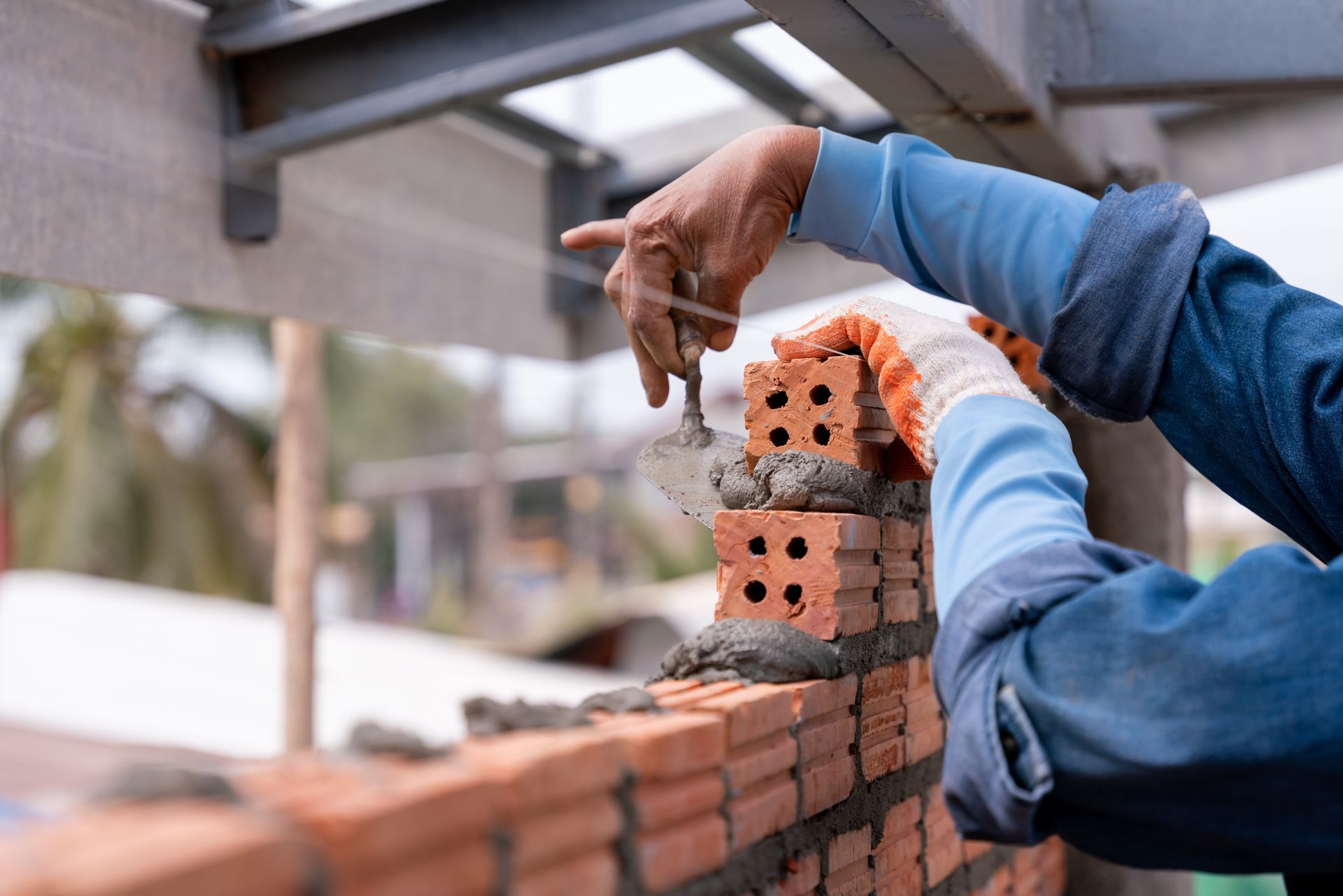
Tuckpointing restores weathered mortar between brick courses without replacing the bricks themselves. A mason removes deteriorated mortar to a specific depth, usually around 3/4 inch, then packs in fresh mortar that matches the original profile. The result is a wall that looks nearly new and is sealed against water infiltration again. Skilled brick masonry contractors recommend tuckpointing at the right time to extend the life of a brick wall by decades.
The Most Visible Signs Your Mortar Joints Are Failing
Mortar damage has clear visual cues. Walking a slow lap around any brick structure and looking closely at the joints can reveal most problems.
Recessed or Crumbling Mortar
When mortar pulls back from the face of the brick and crumbles at a touch, it has lost its binding strength. In Cape Coral, salt air accelerates this breakdown by reacting with the calcium compounds in standard mortar mixes, causing them to erode from the outside in.
Cracks Running Along the Joint Lines
Hairline cracks that follow horizontal or vertical mortar lines indicate movement or shrinkage. Cape Coral's combination of high heat and heavy rain causes brick assemblies to expand and contract repeatedly throughout the year. That cycling stress can open gaps wide enough for water to enter.
White Staining or Efflorescence on the Brick Face
Efflorescence is the chalky white residue that appears when water moves through masonry and carries dissolved salts to the surface. Seeing it near mortar lines strongly indicates water is already penetrating the joints. Canal-front and waterfront properties in Cape Coral tend to see efflorescence more often because of elevated moisture and salinity in the air.
Spalling or Flaking Brick Faces
When water enters a failing joint, it soaks into the brick body. During Florida's occasional cold snaps, that moisture can expand and push the face of the brick away from its core, a process called spalling. Spalled bricks may require replacement rather than repointing, which is why addressing failing mortar early matters. Qualified brick masonry contractors can assess whether spalling has progressed to the point where full brick replacement is necessary.
Gaps, Voids, or Missing Mortar Sections
In older brick structures across Cape Coral, especially those built during the 1970s and 1980s development boom, entire sections of mortar may be missing. These open voids allow water, insects, and debris to enter the wall cavity. Any visible gap wider than 1/8 inch typically warrants professional evaluation by brick masonry contractors familiar with Southwest Florida's specific climate conditions.
Why Cape Coral's Environment Is Especially Hard on Mortar
Cape Coral averages over 50 inches of rainfall per year, with most falling in concentrated summer storms. High-velocity wind-driven rain during tropical weather events can force water horizontally into vertical joints, pushing past mortar that would hold fine under standard conditions.
Salt air from the Gulf of Mexico and the city's extensive canal system adds chloride ions to any moisture that contacts the masonry. Chloride penetration accelerates mortar deterioration and can cause corrosion in metal ties or reinforcement embedded in the wall. Properties along Cape Coral's canals, near Matlacha Pass, or close to the Cape Coral Yacht Club area may see faster joint erosion than properties farther inland near Burnt Store Road or the Mariner area.
When Tuckpointing Is Enough vs. When You Need More
Tuckpointing is the right call when the brick units are still solid and mortar is the only compromised component. If deterioration is caught before water has repeatedly soaked through the brick body, repointing can restore the wall to full performance. However, if bricks are spalling, if the wall shows bulging or separation, or if mortar failure is widespread and deep, a more involved repair or partial reconstruction may be necessary.
As a general rule, mortar that is soft when probed with a screwdriver, that powders easily, or that has receded more than 1/4 inch below the brick face is ready for tuckpointing. Waiting until damage is visible from the street often means deterioration is already advanced.
Take Action Before the Next Storm Season
Cape Coral's hurricane season runs June through November, and failing joints going into that period represent a real vulnerability. Wind-driven rain at tropical storm force can push enormous volumes of water through even small mortar gaps, causing interior water damage that far exceeds the cost of tuckpointing.
Getting a masonry evaluation in late winter or spring, before the rainy season arrives, allows time to complete repointing before conditions worsen. Brick masonry contractors serving Cape Coral, FL, typically stay busy through summer months, so early scheduling helps secure a timely appointment.
Ready to Protect Your Brick Structure? Contact the Experts
If your brick walls are showing any of the signs described above, now is the time to act. TCG Trinity Construction Group serves Cape Coral and the greater Lee County area with professional masonry repair and tuckpointing services. Their team can inspect your joints, identify the extent of the damage, and recommend the right repair approach for your situation.
Visit the masonry services page to learn more, or contact the team to request a free estimate. Call (239) 922-3189 to speak with someone today. You can also find and review TCG Trinity Construction Group on Google to see what other Southwest Florida property owners have experienced.